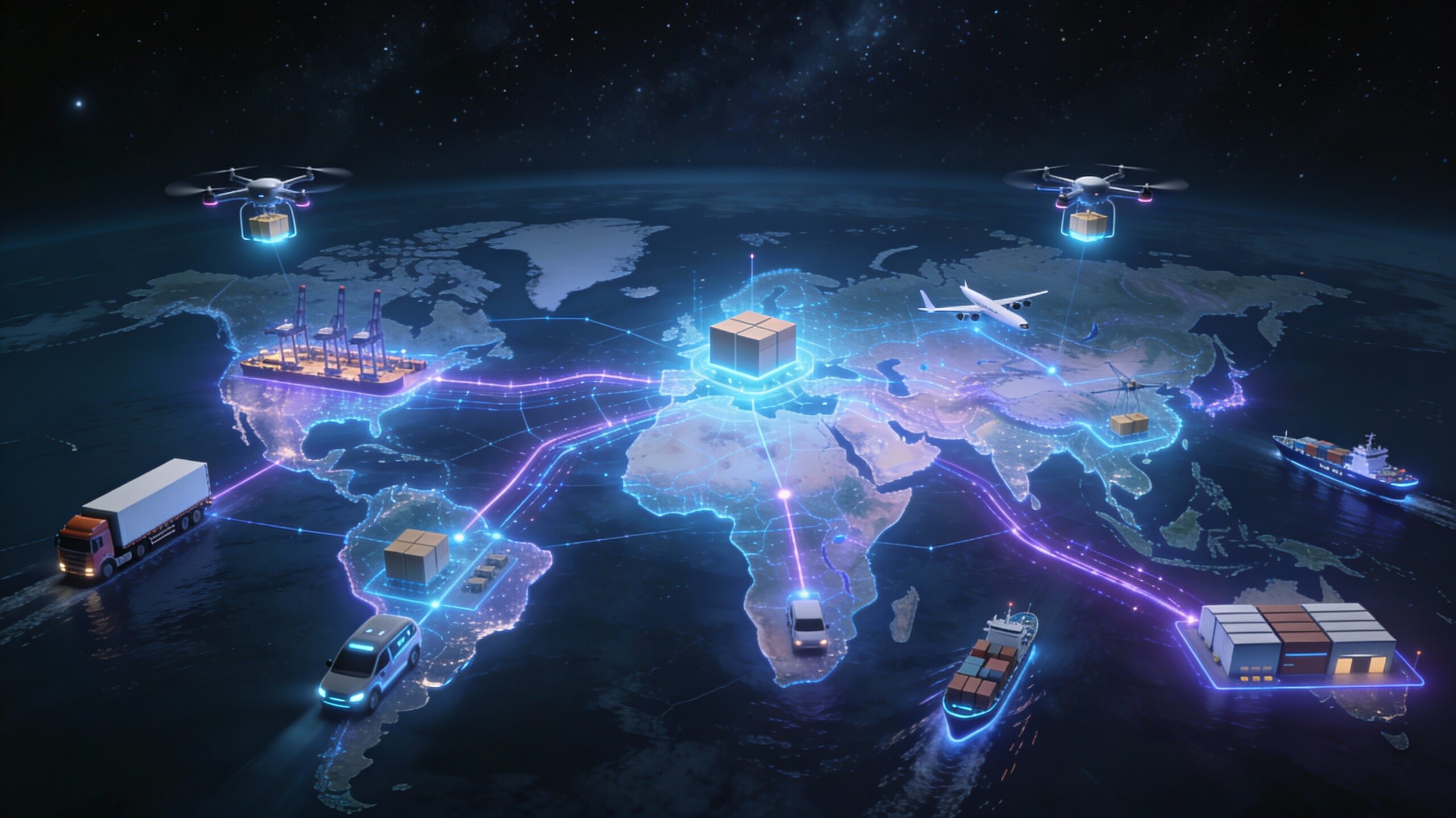
Introduction: The Revolutionary Dawn of 2026 Logistics
In the fast-evolving professional landscape of 2026, AI in Supply Chain Management has officially transitioned from an experimental “nice-to-have” luxury into the absolute operational backbone of global commerce. For decades, the movement of goods from factory to front door was defined by manual spreadsheets, human “gut feelings,” and a persistent lack of real-time visibility. This era of inefficiency is over. Today, the implementation of AI in Supply Chain Management is the primary factor that determines whether a small business survives or gets crushed by the weight of its own logistics.
At AIBizRoute, we have witnessed firsthand how AI in Supply Chain Management has democratized the power of elite-level logistics. Historically, only the world’s largest multi-billion dollar conglomerates could afford the computing power to predict market shifts and optimize shipping routes with surgical precision. But in 2026, the playing field has been leveled. This massive guide will reveal the incredible routes you can take to implement AI in Supply Chain Management into your business, allowing you to achieve massive growth with minimal overhead.
The Inefficiency Trap: Why Traditional Logistics is Dead
Most small businesses are currently stuck in a “logistics trap.” They rely on historical data that is often weeks old, leading to a constant state of reactive management. If a supplier faces a delay in Asia, the business owner in London or Jakarta only finds out when the ship doesn’t arrive. This lack of foresight is exactly what AI in Supply Chain Management solves.
By adopting AI in Supply Chain Management, you move from a reactive posture to a proactive one. Instead of asking “what happened?”, you start asking “what is about to happen?” This powerful shift is not just about technology; it is about a complete transformation of your business mindset. When you master AI in Supply Chain Management, you stop being a victim of global supply chain volatility and start becoming a master of your own destiny.
Route 1: Incredible Demand Forecasting and Market Prediction
The single biggest expense for any product-based business is “Dead Stock”—inventory that sits in a warehouse collecting dust because the owner guessed wrong about consumer demand. AI in Supply Chain Management completely eliminates this costly guessing game.
- Multivariate Machine Learning: Unlike traditional forecasting, AI in Supply Chain Management analyzes thousands of diverse data points simultaneously. It correlates weather patterns, inflation rates, geopolitical tensions, and even viral social media sentiment to predict what your customers will want before they even know they want it.
- Hyper-Local Inventory Optimization: AI in Supply Chain Management allows you to pre-position your stock. If the AI detects a localized surge in demand for a specific item in a particular city, it will trigger an automated move to shift your inventory to the closest warehouse. This results in faster shipping and lower costs.
- The Power of Accuracy: According to recent industry benchmarks from Gartner, businesses utilizing AI in Supply Chain Management have seen a massive 45% increase in forecasting accuracy, leading to a significant reduction in waste.
Route 2: Powerful Route Optimization and Fleet Efficiency
Shipping costs are a massive drain on the profits of small and medium enterprises. The “Last Mile” of delivery is notoriously the most expensive and least efficient part of the process. AI in Supply Chain Management provides the ultimate solution to this challenge.
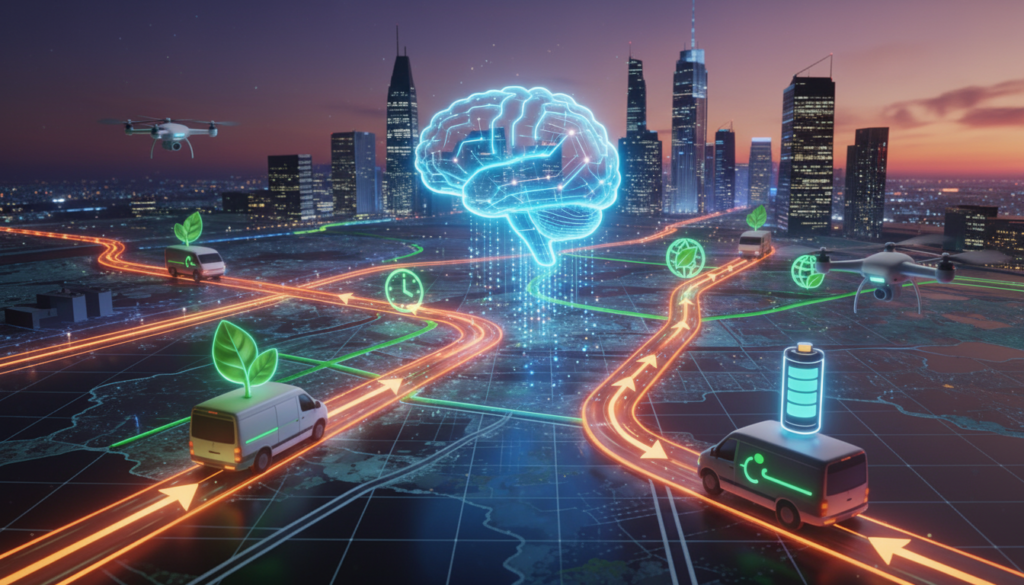
- Real-time Dynamic Routing: The algorithms within AI in Supply Chain Management act as a super-charged, intelligent GPS. These systems calculate the most efficient path for every vehicle in your fleet in real-time, accounting for traffic jams, construction zones, and even fuel efficiency based on the weight of the cargo.
- The “Tetris” Effect (Load Optimization): AI in Supply Chain Management calculates the most efficient way to pack a container or a delivery van to ensure every cubic inch of space is utilized. This means you ship more product with fewer vehicles, directly increasing your profit margins.
- Sustainability and ESG: In 2026, consumers care about your carbon footprint. By using AI in Supply Chain Management to optimize your routes, you reduce fuel consumption and emissions, which serves as an incredible marketing point for your brand.
Route 3: Massive Improvements in Supplier Relationship Management (SRM)
A business is only as strong as its weakest link in the chain. AI in Supply Chain Management helps you build a resilient, automated wall between your business and potential supplier failures.
- Automated Geopolitical Risk Assessment: Tools for AI in Supply Chain Management now crawl thousands of global news sources and financial reports to alert you to potential risks. If a supplier is located in a region where a port strike is looming or where trade tensions are rising, the AI will alert you weeks in advance.
- Automated Procurement Cycles: You can set “Incredible” automated triggers within your AI in Supply Chain Management system. For example, if your stock of a bestseller hits a specific threshold, the AI automatically places a reorder, selects the cheapest shipping method, and pays the invoice—all without human intervention.
The ROI of AI: Why the Investment is Mandatory
Many owners fear the cost of implementing AI in Supply Chain Management. However, in 2026, the cost of not implementing it is much higher.
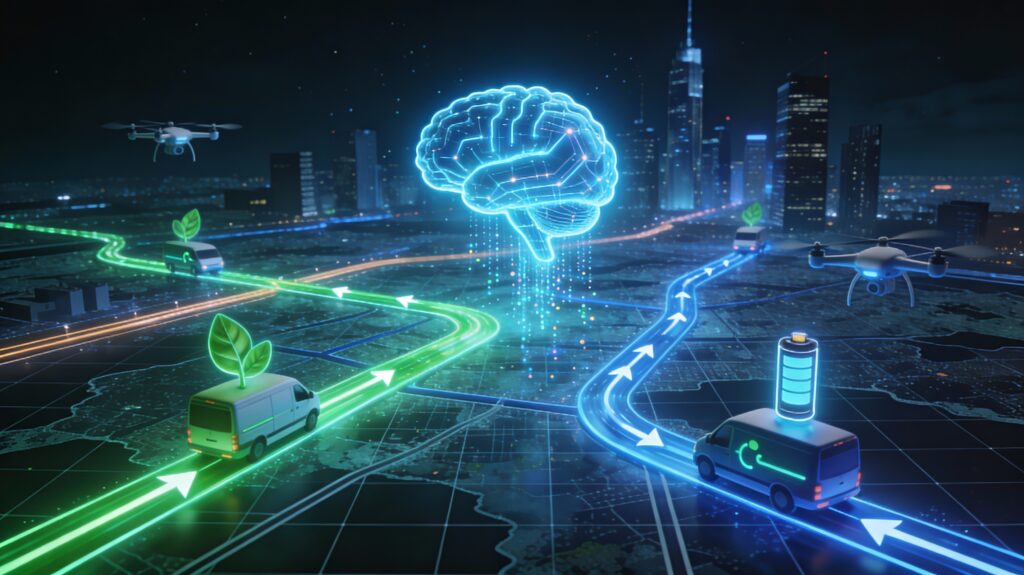
- Reduced Labor Costs: Automation through AI in Supply Chain Management removes the need for a large team to manage data entry and manual tracking.
- Increased Cash Flow: By reducing inventory levels by even 10%, you free up massive amounts of cash that can be used for AI Lead Generation Automation to find more customers.
- Customer Satisfaction: Fast, accurate delivery is the number one driver of repeat business. AI in Supply Chain Management ensures you deliver on your promises every single time.
A 30-Day Blueprint for Implementing AI in Supply Chain Management
How do you actually start this journey? At AIBizRoute, we recommend a structured four-week route:
Week 1: The Data Audit Before you can use AI in Supply Chain Management, you need clean data. Audit your current inventory records. Ensure your e-commerce platform and your warehouse systems are talking to each other. AI needs a single, accurate source of truth to work its magic.
Week 2: Partner Selection Select a tool for AI in Supply Chain Management that fits your current tech stack. Whether you use NetSuite or a more specialized logistics AI, ensure it has a robust API that can connect to your other AI Business Tools for Productivity.
Week 3: The Pilot Category Don’t try to automate your entire warehouse at once. Choose one high-volume category and let the AI in Supply Chain Management system take the lead. Compare the results against your previous manual month. You will likely see incredible improvements in efficiency within the first 14 days.
Week 4: Scaling and Integration Once you have proven the success of AI in Supply Chain Management in one area, scale it across your entire operation. Connect your logistics AI to your financial forecasting tools as described in our guide on AI Financial Forecasting to create a truly automated business empire.
Conclusion: The Powerful Future of Automated Commerce
The implementation of AI in Supply Chain Management is the ultimate differentiator in the 2026 property and product markets. While your competitors are still drowning in paper reports and losing money on shipping delays, you will be operating a frictionless, incredible, and massive logistics machine.
The route to success is now automated. We invite you to explore our About Us page to learn more about how we empower entrepreneurs to dominate their niche. For more foundational knowledge on how to transform your entire operation, don’t miss our AI Automation for Small Business guide. The future is here, and it is powered by AI in Supply Chain Management.