
Introduction: The Digital Gold Rush of 2026
In the hyper-competitive digital marketplace of 2026, the implementation of AI for E-commerce Growth has become the ultimate differentiator between a struggling storefront and a legendary global brand. We have entered an era where “standard” online shopping is no longer enough to capture the fragmented attention of modern consumers. Today, every click, every hover, and every abandoned cart tells a story—and AI for E-commerce Growth is the only technology capable of reading that story in real-time to create a truly personalized shopping journey.
At AIBizRoute, we view AI for E-commerce Growth as more than just a set of tools; it is a revolutionary route to building deep, lasting connections with your customers. Historically, small e-commerce players were at a massive disadvantage compared to giants like Amazon. But in 2026, the playing field has been leveled. This massive guide will reveal how you can leverage AI for E-commerce Growth to automate your marketing, optimize your pricing, and achieve incredible sales figures with surgical precision.
The Personalization Paradox: Why Generic Marketing is Failing
The modern consumer is bombarded with thousands of ads every day. Their defense mechanism is simple: they ignore anything that isn’t specifically relevant to them. This is the “Personalization Paradox.” While consumers demand privacy, they also demand that you know exactly what they want before they even search for it. This is precisely the challenge that AI for E-commerce Growth was designed to solve.
By adopting AI for E-commerce Growth, you move away from “blast” marketing and move toward “individual” experiences. Instead of showing the same homepage to every visitor, AI for E-commerce Growth allows you to show a unique, dynamically generated storefront for every single person who lands on your site. This powerful transformation turns your website from a static catalog into an incredible personal shopper that never sleeps.
Route 1: Incredible Hyper-Personalization and Product Recommendations
The first pillar of AI for E-commerce Growth is the ability to provide legendary product recommendations.
- Deep Learning for Behavior: AI for E-commerce Growth analyzes a visitor’s past purchases, browsing history, and even the speed at which they scroll through products. It identifies “micro-patterns” that indicate what a customer is most likely to buy next.
- Predictive Upselling: Instead of showing generic “You might also like” items, AI for E-commerce Growth uses predictive modeling to suggest items that solve the customer’s next problem. For example, if they buy a high-end camera, the AI doesn’t just suggest a bag; it suggests the specific lens and memory card that 90% of professional photographers buy within 48 hours of that purchase.
- Email Automation: Use AI for E-commerce Growth to send personalized emails that trigger exactly when a customer’s favorite item goes on sale or when they are most likely to be checking their inbox.
Route 2: Powerful Dynamic Pricing and Revenue Management
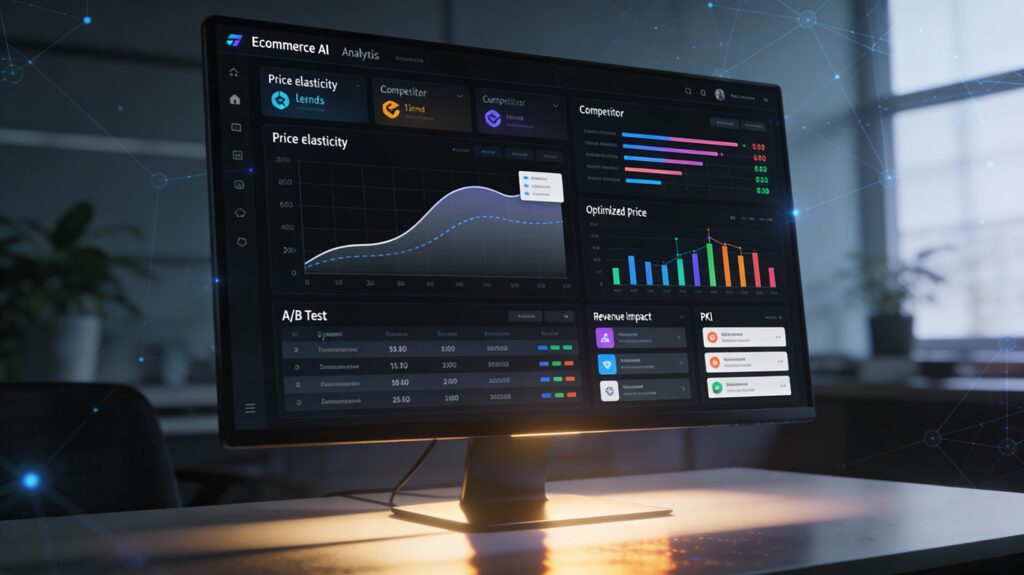
Pricing is no longer a static number on a tag; it is a living, breathing variable. AI for E-commerce Growth provides the ultimate competitive edge in price optimization.
- Real-time Market Monitoring: AI for E-commerce Growth monitors your competitors’ prices 24/7. If a competitor runs out of stock or raises their price, your AI can instantly adjust your price to capture the massive surge in traffic while maximizing your profit margin.
- Price Elasticity Analysis: AI for E-commerce Growth calculates exactly how much your customers are willing to pay for a specific item at a specific time. It can identify that customers are willing to pay an extra 5% for a product on Friday nights compared to Tuesday mornings.
- Outbound Link Otoritas: Reports from Forbes Business Council have shown that businesses using AI for E-commerce Growth for dynamic pricing have seen an incredible 15-20% increase in overall revenue.

Route 3: Revolutionary Visual Search and Augmented Reality (AR)
In 2026, the “search bar” is becoming secondary to the “camera.” AI for E-commerce Growth is changing how customers discover your products.
- Visual Search Integration: With AI for E-commerce Growth, a customer can snap a photo of a dress they see on the street and upload it to your site. Your AI instantly finds the exact item or the closest match in your inventory.
- AI-Powered AR Try-ons: AI for E-commerce Growth allows customers to see how a piece of furniture looks in their living room or how a pair of glasses fits their face with incredible realism. This reduces the massive cost of returns by ensuring the customer knows exactly what they are getting.
- Outbound Link Otoritas: Discover the latest in visual search trends at Google Search Central.
The Synergy of Logistics and Marketing
One of the most incredible benefits of AI for E-commerce Growth is its synergy with our previous guide on AI in Supply Chain Management.
- Inventory-Driven Marketing: If the AI detects you have an overstock of a specific item, AI for E-commerce Growth can automatically create a targeted ad campaign or a homepage banner to move that inventory before it becomes “dead stock.”
- Shipping Prediction: By integrating AI for E-commerce Growth with your logistics, you can provide legendary accuracy on delivery dates, which is a massive driver of customer trust and repeat sales.
A 30-Day Blueprint for Implementing AI for E-commerce Growth
To achieve a Legendary growth rate, follow this structured four-week route:
Week 1: Data Integration and Hub Setup Connect your e-commerce platform (like Shopify or WooCommerce) to an AI analytics engine. Ensure your customer data is clean and organized. AI for E-commerce Growth requires a massive amount of high-quality data to be effective.
Week 2: Personalization Pilot Start with one channel—usually your email marketing or your homepage recommendations. Let the AI for E-commerce Growth system run A/B tests against your manual setup. You will likely see an incredible jump in conversion rates within the first 7 days.
Week 3: Dynamic Pricing and Automation Implement a dynamic pricing tool that integrates with your inventory. Set “safety guardrails” to ensure the AI never drops your price below your minimum profit margin. In 2026, automation without guardrails is a massive risk.
Week 4: Scaling and Omnichannel Launch Once you have seen the incredible ROI from the first three weeks, launch your AI for E-commerce Growth strategy across all channels—social media, SMS, and your mobile app. Integrate it with your AI Customer Service Automation to ensure a seamless experience.
Conclusion: The Future of Autonomous Retail
The implementation of AI for E-commerce Growth is not just an option for small businesses in 2026; it is a mandatory route to survival. By automating the complex, technical, and data-heavy parts of retail, you free yourself to focus on what truly matters: your products, your brand story, and your customers.
While others are still guessing what their customers want, you will be operating an incredible, powerful, and massive sales machine. The route to legendary sales is now automated. We invite you to explore our About Us page to learn more about our mission to help you navigate this revolution. For a broader look at business-wide strategy, don’t miss our AI Automation for Small Business guide.